In the Qatari capital, Doha, diplomacy takes the form of the many palaces and offices that have hosted negotiations. The concentration of embassies – 129 in total – and consulates reaches its peak in Doha’s “Diplomatic Area”. It is a walk through international organisations’ and foreign policy-makers’ offices which functions as the centre for global diplomacy.
The close distance between buildings is symbolic: Doha has become the city where rivals meet and states are close. Where else could the Israeli and Hamas negotiating teams be hosted in two buildings just 10 minutes apart, as ceasefire discussions were ongoing?
But Qatar strategically built this reputation in the last couple decades, embracing neutrality and impartiality as core values of its foreign policy.
The History
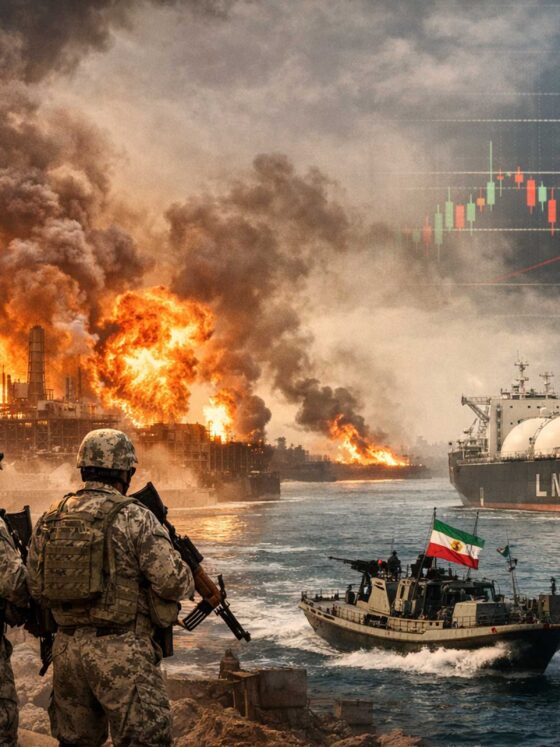
54 years ago, in 1971, Qatar obtained its independence and found itself surrounded by Saudi Arabia’s religious power and oil resources, Dubai’s restless development, and Egypt’s political grip. Reflectors were pointed at Qatar after gas was discovered in 1990. Today, the South Pars/North Dome gas field – which partly lies in Iran – is the world’s largest natural gas field.
It didn’t take long for Qatar to become the leading exporter of liquified natural gas (LNG), boosting its economy and wealth.
In December 1995 Qatar takes on the role of mediator in the Hanish Islands dispute between Eritrea and Yemen. It is the first reported instance of Qatar’s diplomatic involvement, the first of many.
Politically the mission of diplomacy is enshrined in the 2003 constitution, which states that Qatari foreign policy “is based on the principle of strengthening international peace and security by means of encouraging peaceful resolution of international disputes”.
Building the perception of a neutral and independent actor in the global sphere, Qatar engaged in negotiation for peaceful resolution, most notably in the 2008 Lebanese political crises, the 2007–2010 Houthi ceasefires in Yemen, the 2010–2011 Darfur peace process and the 2012 Hamas-Fatah reconciliation agreement.
Backing the Qatari diplomatic effort were two main players: the Qatar Investment Authority and Al Jazeera, the news outlet. The former began establishing its financial power abroad. And it succeeded: not only does it now have £100bn property in Britain – between state and private institutions – but Qatar has also acquired over the years the Paris Saint-Germain football club, the American Miramax studios and the Asia Square Tower 1 in Singapore, and has co-built with the United States the Al Udeid airbase, US’s largest military base in the region. The latter was key to spreading Qatar’s cultural influence regionally.
But Qatari notorious neutrality crumbled during the Arab Spring, when, in contrast to other countries in the region, it sided with the protesters, backing the revolution in Egypt, Syria, Tunisia and Libya. The protests’ coverage by Al Jazeera, which aligned with Qatari foreign policy positions, and its close relations with Iran were perceived as a threat by neighbouring states, and tensions grew.
On June 5th, 2017, Saudi Arabia, the UAE, Yemen, Egypt and Bahrain decided to cut diplomatic ties with Qatar. In practical terms, that meant no air, land or sea crossing across the Gulf and Egypt was permitted. Saudi Arabia and the UAE had their troops ready to invade Qatar. They never did invade – the US secretary of state, Rex Tillerson, intervened – but the land blockade was not lifted. Supermarkets had to be filled, though, and so Qatar found new partnerships. At the beginning, food was imported from Turkey, then also from Europe, Australia, and California, with Qatar Airways airbuses flying cows around the planet.
In February 2020, trusted as an impartial regional partner by the USA, Qatar made a big comeback in the diplomatic game when it was approached by the US to be the third-party negotiator in the mediation with the Taliban.
Thanks to that, Qatar’s diplomatic ambitions could evolve from enhancing its own safety into sustaining the entire world’s security.
After almost four years, in 2021 the blockade finally came to an end, and Qatar embraced even more the politics of mediation, aiming to make itself indispensable in all diplomatic relations. At the top of the list was the USA, which had prevented Saudi and Emirati invasion four years before. And it succeeded, once again: over the years the Al Udeid airbase drastically expanded and became the headquarters for USA military command and intervention in the region. With just one airbase, Qatar beautifully managed to achieve two goals: closer ties with the United States and protection from foreign attacks, as both NATO and American troops would get involved. If the USA was providing security, in exchange Qatar directed its investments strategically. Striving to show it could be a useful ally, it is now the US’s second largest partner in the world for foreign military sales.
Qatar has since partaken in the 2021 Somalia-Kenya border agreement, the 2022 Chad Agreement and de-escalation in Libya and the 2023 return of US hostages from Iran, among others. More recently, Qatar has been the locus of ceasefire negotiations between Hamas and Israel, as well as discussions over aid and evacuating the wounded.
We come to May 2025: Donald Trump lands in Doha. It is the first US presidential trip to Qatar, the culmination of a two-decade-long story of a small, forgotten peninsula that grows into a key global player.
The People
Sitting at the negotiating table is a small, very small actually, team.
The al-Thani family has been the ruling family in Qatar for almost two centuries. In 1995 mediating between Eritrea and Yemen was Sheikh Hamad bin Khalifa. He had a new vision for Qatar: not a puppet of foreign international relations but a powerful state, economically and culturally. Part of this project’s implementation was funding the Al-Jazeera Arabic satellite television station and investing in the country’s production of liquefied natural gas. In 2013 Sheikh Tamim bin Hamad al-Thani took over from his father, who resigned in the wake of the Arab Spring protests. His mandate: promote Qatar’s independence and power through sports. The 2022 FIFA World Cup is just the tip of the iceberg of this work. al-Thani was also the one behind Qatar’s purchase of the Paris Saint-Germain football club: in 2005 he had founded Qatar Sports Investments, the government-operated shareholding organisation that owns the club.
Tamin’s strategy to boost Qatar’s international positioning also includes flexible economic and political relations. He skipped the annual meeting of the Gulf Cooperation Council (GCC) while Qatar was under the economic blockade and came back in 2021 to sign the agreement that would put an end to it.
Since the 7th of March 2023, Sheikh Mohammed bin Abdulrahman bin Jassim Al-Thani has been, simultaneously, the prime minister of Qatar and the minister of foreign affairs, a position he has held since 2016. At the same time, he is also chairman of the Qatar Fund For Development (QFFD), whose mission is stated on the official website:“QFFD is a public development institution committed, on behalf of the State of Qatar, to improving the livelihood of communities around the world.”
Sheikh Mohammed’s name has come up a lot in the talks between different countries in the region since after the 7th of October 2023. That November he met with CIS director William J. Burns and the head of the Mossad, David Barnea. The result of the meeting was a two-day extension to the ceasefire and a prisoner exchange agreement: 100 Israelis for 240 Palestinians. For his involvement in these negotiations, he owns the nomination as one of the “100 Most Influential People” in the world for 2024, according to TIME magazine.
The last person sitting at the diplomatic tables is the minister of state for mediation, disputes and conflict resolutions, Mohammed bin Abdulaziz Al-Khulaifi, a lawyer turned diplomat turned politician. Also his mandate clearly reflects Qatar’s ambition to be an active actor in the peaceful settlement of disputes, as we are certainly going to witness in the years to come.
Share